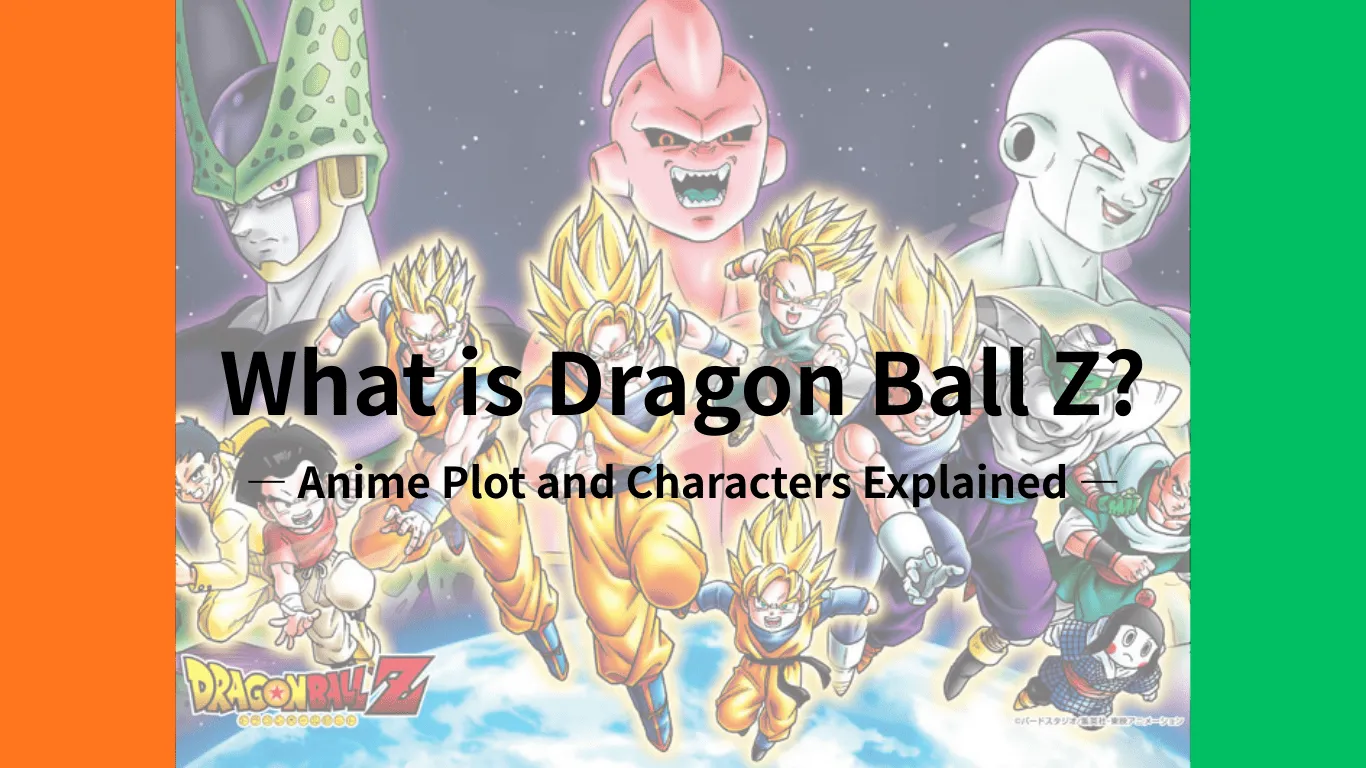
When we talk about the “face” of Japanese anime on a global scale, one name stands above the rest: Dragon Ball Z (DBZ). For over three decades, the screaming power-ups, the golden-haired Super Saiyans, and the world-shaking battles have defined the childhoods of millions across every continent.
Produced by Toei Animation and based on the legendary manga by Akira Toriyama, Dragon Ball Z isn’t just an anime; it’s a cultural phenomenon that pioneered the “Shonen” genre’s international explosion. But even for those who have watched the series dozens of times, there are layers to this story—production secrets, forgotten lore, and artistic choices—that remain hidden in the shadows. Today, at AnimeFromJapan, we are peeling back the curtain to reveal the 7 secrets that only the most dedicated hardcore fans truly understand.
(Source: Toei Animation Official – https://www.toei-anim.co.jp/ptr/dbz/)
- What is Dragon Ball Z? An Overview of the Legend
- The 7 Hidden Secrets Every Hardcore Fan Should Know (SPOILERS AHEAD)
- 1. The Real Reason for the “Z” in the Title
- 2. The Tragic Origins of the Super Saiyan Design
- 3. The Forgotten Characters: What Happened to Launch?
- 4. The Influence of Journey to the West vs. Hollywood Action
- 5. Why Future Trunks’ Timeline is a Paradox
- 6. The Record-Breaking Voice Acting Feats
- 7. Deleted Scenes and Censorship in International Versions
- The Core Appeal: Why We Still Love DBZ Today
- FAQ: Frequently Asked Questions
- Conclusion: The Legend Never Dies
What is Dragon Ball Z? An Overview of the Legend
Before we dive into the secrets, we must understand the foundation. Dragon Ball Z is the sequel to the original Dragon Ball anime, covering the latter 325 chapters of Akira Toriyama’s manga. While the first series was a whimsical, adventure-filled journey inspired by Chinese mythology, Z pivoted sharply into high-stakes science fiction and martial arts action.
Starting with the arrival of Goku’s brother, Raditz, and ending with the peaceful departure of Uub, the series spans the Saiyan, Frieza, Cell, and Majin Buu sagas. It introduced concepts that are now industry standards:
- Power Levels: The “Over 9000” meme that defined a generation.
- Transformations: A physical manifestation of a character’s growth.
- Redemption Arcs: Turning mortal enemies into the Earth’s greatest defenders.
(Source: Akira Toriyama / Shueisha Official – https://www.shonenjump.com/j/rensai/dragonball.html)
The 7 Hidden Secrets Every Hardcore Fan Should Know (SPOILERS AHEAD)
1. The Real Reason for the “Z” in the Title
One of the most debated topics in anime history is: What does the “Z” actually stand for? For years, fans speculated it stood for “Zenkai” (full recovery) or was simply a cool-sounding letter. However, the truth is much more pragmatic. Akira Toriyama himself stated that he chose “Z” because it is the last letter of the alphabet. At the time, he was feeling exhausted from the continuous weekly serialization and wanted to signal that this was the final part of the story. Ironically, the “Z” era became the most successful part of the franchise.
2. The Tragic Origins of the Super Saiyan Design
The Super Saiyan transformation is the most iconic visual in anime. But the reason Goku’s hair turns blonde wasn’t originally about “golden energy.” In the manga, the hair is depicted as white. Toriyama’s assistant spent a massive amount of time painstakingly filling in Goku’s black hair with ink. To save his assistant time and reduce the labor of inking, Toriyama decided that the transformation would turn the hair blonde—which, in the black-and-white manga, meant it could be left as blank white space. This “efficiency hack” created the most legendary transformation in history.
3. The Forgotten Characters: What Happened to Launch?
Early fans of Dragon Ball remember Launch, the girl who changed personalities when she sneezed. In Dragon Ball Z, she almost completely disappears. The reason? Toriyama simply forgot she existed. The author is famous for his “forgetfulness” regarding his own lore. While the anime added a few filler scenes of her, in the canon manga, her character arc was simply dropped because the creator lost track of her during the high-octane shift into the Saiyan Saga.
4. The Influence of Journey to the West vs. Hollywood Action
While Dragon Ball was a direct homage to the Chinese classic Journey to the West, Dragon Ball Z shifted its inspiration toward Western cinema. The character of Frieza was inspired by real estate speculators (the “scariest people” Toriyama could think of during the Japanese economic bubble), and the visual style of Future Trunks was heavily influenced by The Terminator. This blend of Eastern philosophy and Western sci-fi aesthetics is what made DBZ so uniquely accessible to a global audience.
5. Why Future Trunks’ Timeline is a Paradox
Hardcore fans often argue about the logic of the Cell Saga. Unlike other time-travel stories where the past changes the future, DBZ uses Multiverse Theory. When Trunks travels back to warn Goku, he doesn’t save his own world; he creates a new parallel timeline. This is why, even after Cell is defeated, Trunks must return to a devastated future. It was a groundbreaking move for Shonen anime to acknowledge that “changing the past doesn’t fix your own present.”
6. The Record-Breaking Voice Acting Feats
Masako Nozawa, the Japanese voice of Goku, Gohan, and Goten, is a living legend. She holds Guinness World Records for her work on the franchise. Her most impressive feat is the stamina required for the “power-up” screams. In the Japanese industry, it is unheard of for a performer to maintain such intense, soul-straining yells for over 30 years without damaging their voice. She is the true heart of the series.
7. Deleted Scenes and Censorship in International Versions
If you grew up watching the “Ocean Dub” or the early “Funimation” version in the 90s, you saw a different show. The concept of “The Next Dimension” was invented to replace “Hell” or “Death” to appease Western censors. Characters had their shirts edited to remove religious or “violent” words, and blood was digitally removed from iconic scenes. Finding the original, uncut Japanese footage revealed a much darker, more visceral story to international fans years later.
The Core Appeal: Why We Still Love DBZ Today
Why does a show from 1989 still trend globally in the 2020s? The answer lies in its emotional simplicity and the theme of Redemption. Characters like Piccolo and Vegeta began as genocidal villains. DBZ gave them the space to grow, fail, and eventually find humanity through the kindness of Goku. It taught a generation that no matter where you come from, you can always choose to be better.
FAQ: Frequently Asked Questions
Q: Is Goku a good father?
A: It’s a common meme that Piccolo is Gohan’s real father. While Goku is often absent, his love is shown through his ultimate sacrifices. He is a martial artist first, and a traditional father second.
Q: What is the difference between Dragon Ball Z and Kai?
A: Kai is a remastered version that removes “filler” episodes and follows the manga more closely. Z is the original 291-episode run with all the classic 90s padding and music.
Conclusion: The Legend Never Dies
Dragon Ball Z is more than the sum of its fights. It is a masterclass in tension, iconic character design, and the spirit of never giving up. Whether it’s the secret of the blonde hair or the mystery of the “Z,” these details only add to the rich tapestry of a series that will likely be watched for another thirty years. Keep training, and keep searching for those Dragon Balls!