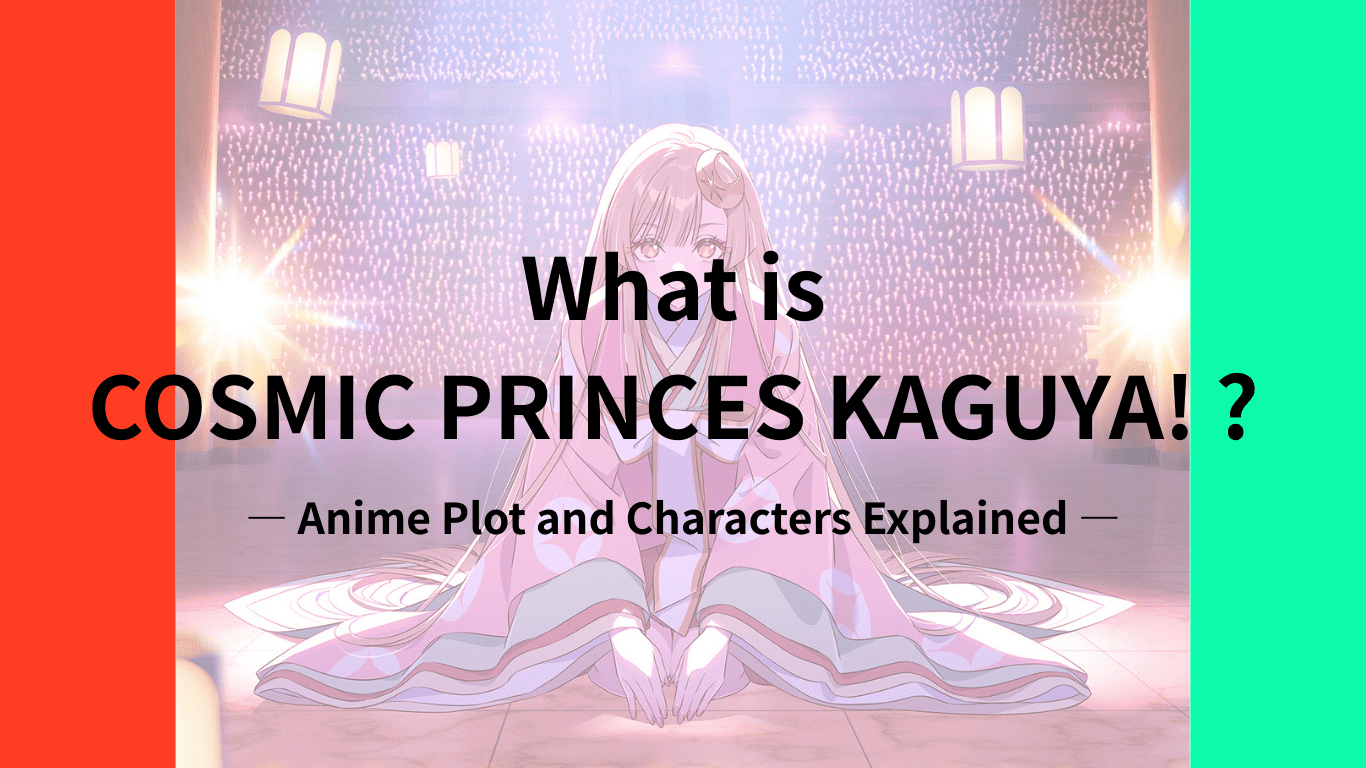
On January 22, 2026, the global anime landscape shifted with the exclusive Netflix release of “Cosmic Princes Kaguya!” (超かぐや姫). Directed by the visionary Shingo Yamashita, this feature-length film is not just another retelling of Japan’s oldest story, The Tale of the Bamboo Cutter. It is a high-kinetic, digitally evolved “Space Fantasy” that has redefined what modern animation can achieve in the mid-2020s.
Yamashita, renowned for his breathtaking work on Jujutsu Kaisen and his mastery of digital “webgen” animation styles, has taken the ancient myth and shattered its traditional boundaries. In this 2026 epic, the moon is an interdimensional fortress, and Kaguya is a warrior caught in a cycle of celestial rebirth. For international audiences, this film represents the pinnacle of “New Age” Japanese cinema—blending deep cultural roots with a visual language that feels like a fever dream of light and motion.
- The Shingo Yamashita Revolution: Why This Kaguya is Different
- The Plot: Rebirth, Rebellion, and the Stars [Spoilers Included]
- The “Webgen” Evolution: Visual Language of the 2026 Film
- Modern Themes: Identity and the Digital Age
- Soundscape of the Heavens: Music and Voice Acting
- Viewer’s Guide: How to Experience the Kaguya Phenomenon
- FAQ: Frequently Asked Questions about the 2026 Film
- The Final Verdict: A New Standard for Space Fantasy
The Shingo Yamashita Revolution: Why This Kaguya is Different
Until now, The Tale of the Princess Kaguya was synonymous with the soft, watercolor strokes of Studio Ghibli. However, Shingo Yamashita’s Cosmic Princes Kaguya! pivots 180 degrees. Released in early 2026, the film utilizes cutting-edge digital compositing and fluid, non-line-based animation that Yamashita is famous for.
A Kinetic Masterpiece of 2026
The “Cosmic” in the title refers to the film’s scope. Yamashita treats the lunar kingdom as a hyper-advanced civilization existing in a higher plane of reality. The animation reflects this through “vibrant light-trails” and “experimental perspective shifts” that make the space battles feel immersive and overwhelming. This is Kaguya for the Spider-Verse generation—bold, colorful, and unapologetically fast-paced.
Netflix as a Global Stage
By choosing Netflix as its exclusive home, the production has reached millions of fans simultaneously. The 2026 release marks a major milestone in Japan’s “Global First” strategy, where high-concept sci-fi is designed to resonate with both local audiences and international fans who crave a fresh take on classic mythology.
The Plot: Rebirth, Rebellion, and the Stars [Spoilers Included]
Note: The following section contains major plot spoilers for the 2026 film Cosmic Princes Kaguya!.
The 2026 narrative begins with a startling revelation: the “Bamboo” that Kaguya was found in was actually a crashed escape pod containing a genetic “Seed” from a dying lunar empire. The film follows Kaguya as she navigates her teenage years on Earth, unaware that her very existence is a beacon for a celestial fleet coming to “reclaim” their lost weapon.
The Reimagined “Five Trials”
In a brilliant narrative twist, the “Five Impossible Tasks” given to the suitors in the original myth are reimagined as five cosmic seals that Kaguya must break to regain her true form. Instead of suitors bringing her trinkets, Kaguya herself must travel to the far reaches of a digital-landscape version of Japan to reclaim her memories. This journey is a visual tour-de-force, with Yamashita utilizing 3D environments that feel like hand-drawn illustrations.
The Choice: Earth vs. Eternity
The climax of the 2026 film is a heartbreaking confrontation between Kaguya and the Moon Sovereigns. Unlike the original ending where she is forced to forget Earth, Yamashita’s Kaguya wages a war for her memories. It is a story of **humanity over divinity**, where the Princess chooses a mortal life filled with pain and love over an eternal, emotionless existence in the stars. The final scene, featuring a breathtaking “ascent” sequence, has already become an iconic moment in 2026 anime history.
Source: Netflix Official – Cosmic Princes Kaguya! (2026) https://www.netflix.com/
The “Webgen” Evolution: Visual Language of the 2026 Film
One cannot discuss Cosmic Princes Kaguya! without addressing its visual DNA. Shingo Yamashita has long been a pioneer of the “Webgen” style—animation that prioritizes fluid motion and expressive digital compositing over rigid line art. In this 2026 feature, this style reaches its zenith. The film abandons the traditional “paper-like” texture of anime for something more ethereal and luminous, fitting for a story about a celestial being.
The lunar environments are rendered using a hybrid of generative fractals and hand-painted digital backgrounds, creating a sense of “uncanny beauty” that feels genuinely alien. When Kaguya unleashes her cosmic powers, the screen explodes with light-streaks and distorted perspectives that mirror her internal emotional turmoil. This is a deliberate choice by Yamashita: the visuals aren’t just for show; they are a direct manifestation of the protagonist’s soul.
Modern Themes: Identity and the Digital Age
While the original 10th-century myth dealt with the transience of life, the 2026 Netflix adaptation tackles themes of **data, memory, and autonomy**. In the film, the Lunar Kingdom stores the souls of its citizens in a collective digital hive-mind. Kaguya’s descent to Earth is framed as a “system error” that allowed her to develop an individual ego.
The narrative asks a hauntingly modern question: Is a memory valuable if it brings pain, or should we embrace the ‘perfect’ oblivion of the moon? By choosing to fight for her earthly memories—no matter how small or fleeting—Kaguya becomes a symbol for modern audiences struggling to maintain their humanity in an increasingly automated world. This philosophical depth is what has sparked thousands of discussion threads on social media since its January 22 release.
Soundscape of the Heavens: Music and Voice Acting
The auditory experience of Cosmic Princes Kaguya! is just as revolutionary as its visuals. The soundtrack, a collaborative effort between experimental electronic producers and traditional court musicians, blends heavy bass and glitch-hop with the haunting melodies of the Hichiriki and Ryuteki.
Performance of a Lifetime
The voice cast is led by a breakthrough performance from a newcomer whose voice perfectly captures the transition from a fragile human girl to an omnipotent celestial sovereign. The supporting cast includes veteran Seiyuu who lend a sense of gravitas to the “Moon Elders,” contrasting with the raw, naturalistic acting of the human characters on Earth. This vocal contrast reinforces the thematic divide between the cold divinity of the moon and the warm imperfection of humanity.
Viewer’s Guide: How to Experience the Kaguya Phenomenon
For those new to Yamashita’s work or the Kaguya myth, here is how to get the most out of your Netflix viewing experience:
- HDR is a Must: Given the film’s reliance on light and color grading, watching in 4K HDR is highly recommended to see the full spectrum of the “Cosmic” effects.
- Watch the Backgrounds: Yamashita often hides symbolic imagery in the digital backgrounds—pay attention to the recurring motifs of blooming bamboo in the lunar circuitry.
- The Credits Matter: Don’t skip the end credits; the visual epilogue provides crucial closure to Kaguya’s journey on Earth.
FAQ: Frequently Asked Questions about the 2026 Film
Q: Is this film a sequel to any previous Kaguya anime?
A: No. It is a completely standalone reimagining. While it pays homage to the 1988 OVA and the Ghibli version, it is its own unique universe.
Q: Why did Netflix choose a January release?
A: January 22 coincides with a specific lunar phase in 2026, adding a layer of “meta-immersion” for fans watching during the real-world winter moon.
Q: Will there be a sequel?
A: While the film is a complete story, Shingo Yamashita has hinted in interviews that the “Cosmic” universe has more stories to tell regarding the other planets in the lunar system.
The Final Verdict: A New Standard for Space Fantasy
Cosmic Princes Kaguya! is a triumph of 2026 animation. It proves that ancient stories are not static relics of the past but living canvases that can be repainted with the tools of the future. Shingo Yamashita has gifted us a Kaguya who doesn’t just look at the moon and cry—she looks at the moon and fights for her right to stay under the sun.
This film is a must-watch for anyone who values the intersection of technology and storytelling. It is a shining example of why Japanese subculture continues to lead the world in emotional and visual innovation. The legend of Kaguya has been told for a thousand years, but after this Netflix masterpiece, it will never be seen the same way again.
Source: Netflix Anime Official https://www.netflix.com/