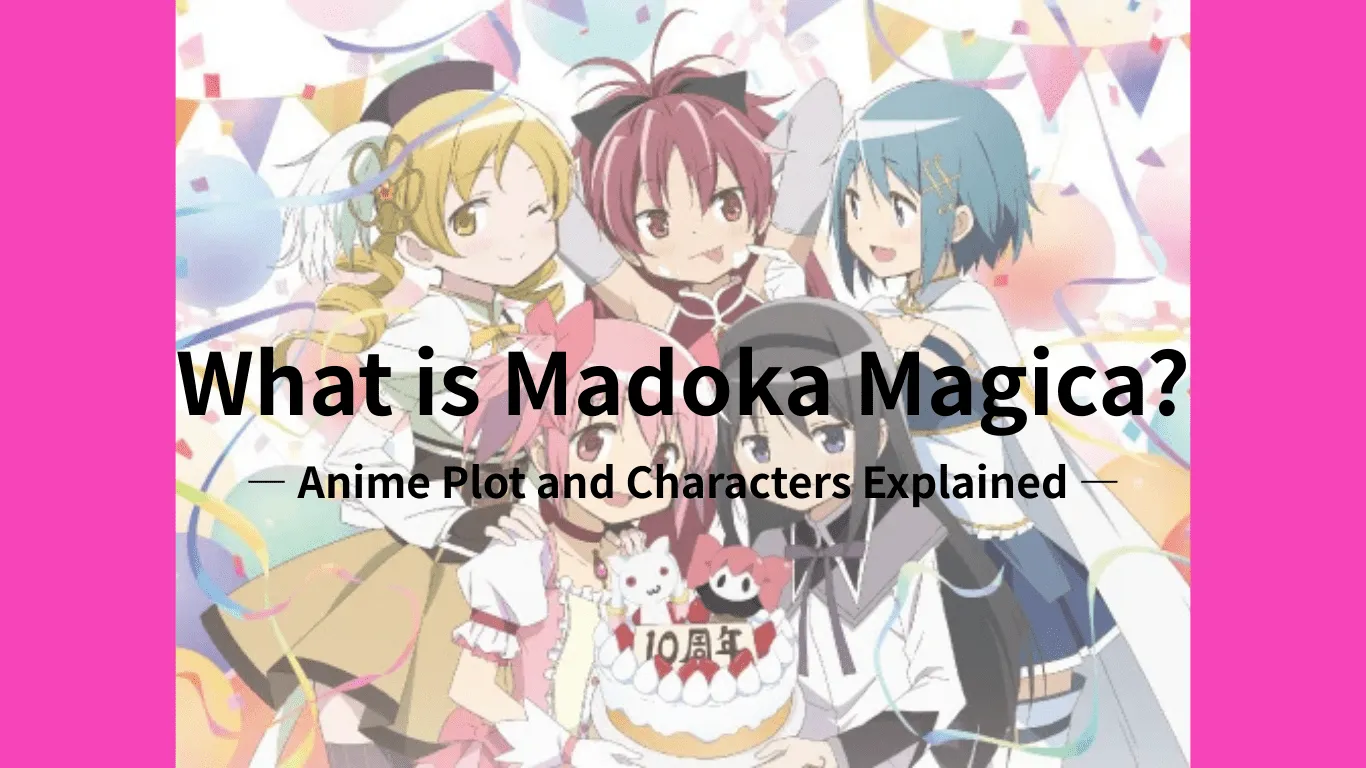
Since its broadcast in 2011, Puella Magi Madoka Magica (often shortened to Madoka Magica) has stood as one of the most influential anime series of the 21st century. It didn’t just capture the hearts of viewers in Japan; it created a massive cultural wave across the globe, winning numerous awards including the Grand Prize for Animation at the Japan Media Arts Festival.
For many international fans, Madoka Magica is often cited alongside titans like Evangelion or Fullmetal Alchemist as a gateway into the deeper, more philosophical side of Japanese animation. It remains a hot topic even today, especially with the anticipation surrounding the upcoming movie sequel, Walpurgisnacht: Rising.
Not Your Average Magical Girl Anime
At first glance, the show appears to be a standard “Mahou Shoujo” (Magical Girl) anime. The character designs are cute, the outfits are frilly, and the mascot character looks adorable. However, this is a deliberate misdirection.
Madoka Magica is a deconstruction of the genre. It takes the tropes established by shows like Sailor Moon and Cardcaptor Sakura—friendship, hope, and magic—and flips them on their head to explore the realistic psychological consequences of being a child soldier fighting a supernatural war. It is a story about the steep price of miracles.
Basic Information & Staff
To understand why this anime looks and feels so unique, one must look at the creative team behind it. The show is known as a “Magica Quartet” creation.
Production Details (Shaft & Gen Urobuchi)
The anime was produced by Studio Shaft, known for its avant-garde visual style, distinct head tilts (the “Shaft Tilt”), and abstract backgrounds.
- Director: Akiyuki Shinbo (Bakemonogatari, March Comes in Like a Lion) brought his signature surreal direction.
- Scriptwriter: Gen Urobuchi (Fate/Zero, Psycho-Pass) is the key figure here. Known in the industry as the “Urobutcher” for his dark, tragic, and nihilistic storytelling, his involvement was kept somewhat secret during the initial marketing to surprise viewers with the plot’s dark turn.
- Character Design: Ume Aoki (Hidamari Sketch) provided the deceptively cute and round character designs that contrast sharply with the grim story.
The Iconic Soundtrack by Yuki Kajiura
The atmosphere of Madoka Magica is heavily defined by its music, composed by the legendary Yuki Kajiura (Sword Art Online, Demon Slayer). Her score mixes operatic vocals, European folk influences, and electronic beats to create a sense of ancient mystery and impending doom. Tracks like “Sis puella magica!” have become iconic in the anime community.
Plot Summary (Spoiler-Free)
The Encounter with Kyubey
The story takes place in the futuristic city of Mitakihara. The protagonist, Madoka Kaname, is an ordinary 14-year-old girl with a loving family and good friends. One day, she has a bizarre dream of a dark-haired girl fighting a monstrous creature.
The next day, that very girl, Homura Akemi, transfers into her class. Homura is cold, perfect at everything, and seems to harbor a mysterious hostility toward Madoka getting involved with anything supernatural.
Madoka and her best friend, Sayaka Miki, soon encounter a small, cat-like creature named Kyubey. Kyubey offers them a contract:
“I will grant you any one wish, no matter what it is. In exchange, you must become a Magical Girl and fight against Witches.”
The Choice Madoka Must Make
Witches are invisible entities born from curses that spread despair and cause unexplained suicides and accidents. Magical Girls are the only ones who can defeat them.
It sounds like a heroic destiny. However, as Madoka and Sayaka watch an older magical girl, Mami Tomoe, fight, they begin to hesitate. Is the life of a magical girl really filled with hope? Or is there a darker truth behind the contract? The series focuses heavily on Madoka’s indecision, making her a unique protagonist who spends most of the series observing rather than fighting.
3 Reasons Why Madoka Magica is a Masterpiece
1. The “Dark Fantasy” Twist
It is impossible to discuss this show without mentioning the “Episode 3 Rule.” In anime culture, this rule—giving a show three episodes before judging it—largely stems from Madoka Magica. Without spoiling the specifics, the third episode marks a violent shift in tone that shatters the viewer’s expectations. It transforms from a cute slice-of-life show into a psychological thriller, proving that nobody in this world is safe.
2. Visual Aesthetics: Gekidan Inu Curry’s Witch Barriers
While the real world is animated in a clean, crisp style, the “Labyrinths” (Witch barriers) are completely different. These sequences were designed by the troupe Gekidan Inu Curry. They use a collage style reminiscent of Czech animation or Monty Python cutouts, featuring disjointed photos, weird text, and unsettling imagery (like mustache-wearing cotton balls or scissors). This visual dissonance perfectly represents the insanity of the Witches.
3. Emotional Depth and Philosophical Themes
The series tackles heavy themes such as:
- Utilitarianism: Is it right to sacrifice the few to save the many? Kyubey represents absolute logic devoid of emotion.
- Entropy: The show incorporates scientific concepts (thermodynamics) to explain the magic system.
- Hope vs. Despair: The central thesis is that for every wish (hope), an equal amount of despair must be generated to maintain the balance of the universe.
⚠️ SPOILER ALERT ⚠️
The following section contains spoilers regarding character fates and major plot twists. If you have not watched the series, please skip to the “Watch Order” section.
Character Introduction & Analysis
The characters in Madoka Magica are not just archetypes; they represent different responses to trauma and duty.
Madoka Kaname: The Gentle Protagonist
(CV: Aoi Yuki)
Initially, Madoka seems passive and overly indecisive. However, her inaction is crucial. By witnessing the tragic fates of her friends, she learns the true cost of the system. Her final wish is not for herself, but to rewrite the laws of the universe to save all magical girls from despair. She transcends into a god-like entity (“Ultimate Madoka”), embodying the concept of pure, selfless love.
Homura Akemi: The Mysterious Transfer Student
(CV: Chiwa Saito)
Homura is arguably the true protagonist of the story. It is revealed that she is a time traveler who has repeated the same month nearly 100 times to save Madoka from dying. Her cold exterior is a shell formed by endless trauma and desensitization. Her motivation is singular: “To save Madoka.” This obsessive love leads to the shocking events of the sequel movie, Rebellion.
Mami Tomoe: The Veteran Mentor
(CV: Kaori Mizuhashi)
Mami represents the “ideal” magical girl: elegant, strong, and caring. However, underneath, she is incredibly lonely and terrified. Her brutal death in Episode 3 serves as the catalyst that destroys the girls’ romanticized view of magic. She teaches us that confidence can be fatal if one lets their guard down.
Sayaka Miki: The Idealist
(CV: Eri Kitamura)
Sayaka wishes to heal the hand of a boy she loves, aspiring to be a “Hero of Justice.” Her arc is the most tragic example of the system. She realizes that her wish was not purely selfless—she wanted his love in return. When reality fails her expectations, she falls into despair and transforms into a Witch (Oktavia von Seckendorff), revealing the horrifying truth: Magical Girls grow up to become Witches.
Kyoko Sakura: The Realist
(CV: Ai Nonaka)
Kyoko is initially an antagonist who fights only for herself, believing that wasting magic on others is foolish. She comes from a religious background where her father’s wish led to her family’s destruction. Through her interactions with the idealistic Sayaka, Kyoko regains her humanity and ultimately sacrifices herself so Sayaka won’t die alone.
Kyubey: The Cute but Terrifying Mascot
(CV: Emiri Kato)
Kyubey is an Incubator, an alien species incapable of emotion. They harvest the energy created when a Magical Girl transforms into a Witch to counteract the entropy of the universe. Kyubey is not “evil” in a traditional sense; he is terrifyingly efficient. He views humans merely as livestock or batteries. His quote, “I don’t understand why you humans are so upset when your souls are removed from your bodies,” perfectly encapsulates his alien morality.
Watch Order & Series Guide
If you are new to the franchise, the timeline can be slightly confusing. Here is the recommended order.
1. TV Series (12 Episodes)
Start here. This is the original 2011 masterpiece.
- Alternative: Movies 1 & 2 (Beginnings / Eternal). These are compilation films of the TV series with improved animation. While good, the pacing of the TV series is generally preferred for the first viewing.
2. The Sequel Movie: Rebellion (Hangyaku no Monogatari)
(Movie 3)
This is a direct continuation of the TV series ending. It is a controversial, visually stunning, and mind-bending film that focuses heavily on Homura’s psyche. It is essential viewing to understand the full scope of the story.
3. Magia Record (Side Story)
(TV Anime Series)
Based on the mobile game. It features a new cast of characters in a different city. While enjoyable, it is a spin-off and not required to understand the main Madoka timeline.
4. The Future: Walpurgisnacht: Rising
(Upcoming Movie)
Announced as the official sequel to Rebellion. It promises to finally resolve the cliffhanger ending of the third movie.
FAQ: Common Questions from Beginners
Is Madoka Magica scary? Is it a “depressing” anime?
It is not a horror anime in the “jump scare” sense, but it is a psychological thriller. It deals with heavy themes like death, despair, and suicide. It is emotionally heavy (“depressing” to some), but ultimately, it is also a story about hope and resilience.
What is the age rating?
It is generally rated PG-13 or R-13 depending on the region. Despite the cute art style, it contains violence and disturbing imagery. It is not suitable for young children.
Do I need to know other magical girl shows to enjoy it?
No. While knowing the tropes of Sailor Moon enhances the experience (because you understand what is being subverted), the story stands perfectly on its own as a dark fantasy drama.
Conclusion
Final Verdict: A Timeless Classic
Puella Magi Madoka Magica is more than just a show about girls fighting monsters. It is a tightly written, visually experimental, and emotionally resonant work of art that questions the nature of altruism and sacrifice. Even over a decade later, it retains its power to shock and move audiences.
If you have not watched it yet, prepare yourself for a journey that will change how you look at “magical girls” forever.
Where to Watch
As of 2024, the series is widely available on major streaming platforms:
- Crunchyroll (Subbed & Dubbed)
- Hulu
- Funimation
(Note: Availability may vary by region.)