In the vast landscape of Japanese animation, few titles command as much respect, devotion, and intellectual curiosity as HUNTER×HUNTER. Created by the legendary mangaka Yoshihiro Togashi, this series has transcended the typical shonen genre to become a psychological and philosophical epic. It is a work that respects the intelligence of its audience, offering layers of subtext, complex moral dilemmas, and a power system that functions with the logic of a high-stakes chess game.
Note: This article contains significant spoilers for various story arcs, including the Greed Island and Chimera Ant arcs.
- The Grand Premise: The Quest for Ging and the Hunter Philosophy
- Greed Island: The Masterpiece of System-Based Storytelling
- The Chimera Ant Arc: Evolution, Terror, and the Human Condition
- The Nen System: A Technical Deep Dive
- The Fascinating Characters: A Study in Moral Grey Areas
- Why HUNTER×HUNTER Continues to Define the Genre
- FAQ: Essential Knowledge for New and Returning Fans
- Summary: The Never-Ending Adventure
The Grand Premise: The Quest for Ging and the Hunter Philosophy
The story begins with Gon Freecss, a twelve-year-old boy living on the peaceful Whale Island. His motivation is deceptively simple: he wants to find his father, Ging, a man who abandoned him to pursue the life of a Hunter. Rather than resenting his father, Gon is consumed by a burning curiosity—what could be so wonderful about being a Hunter that it would make a man give up his own son? This question serves as the engine for the entire series.
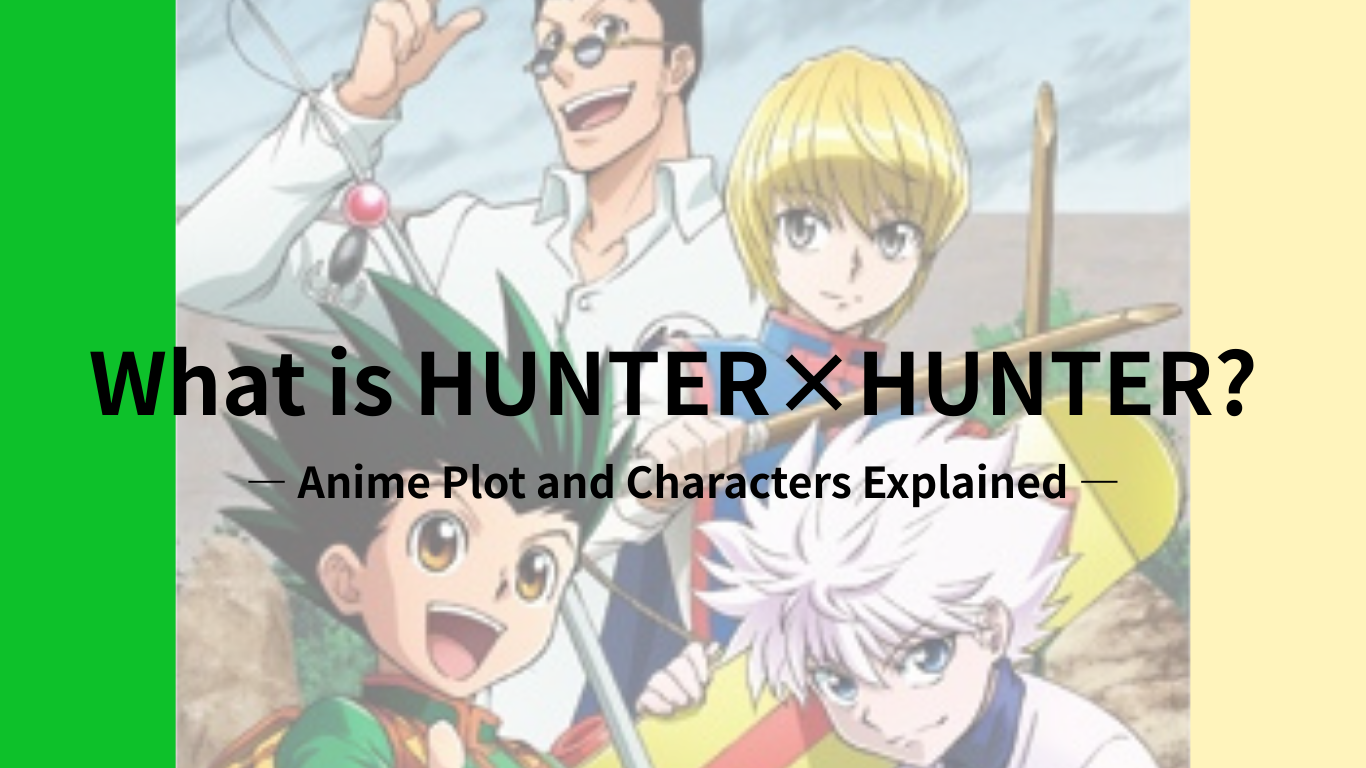
In Togashi’s world, a “Hunter” is not just someone who tracks prey. Hunters are the world’s elite—licensed individuals granted immense privileges to explore the unknown, protect rare species, or hunt down dangerous criminals. However, the path to becoming a Hunter is a meat grinder. The Hunter Exam arc serves as a brutal introduction to the reality of this world; it is a place where participants die frequently, and “fairness” is a secondary concern to survival and ingenuity. Through this journey, Gon forms an inseparable bond with three other applicants: Killua Zoldyck, Kurapika, and Leorio Paradinight. Together, they represent the four pillars of the series’ emotional core, each representing a different aspect of human ambition: curiosity, redemption, vengeance, and altruism.

Greed Island: The Masterpiece of System-Based Storytelling
The Greed Island arc is often celebrated as the ultimate “isekai” or game-based story, long before those genres became saturated. After the dark and urban tension of the Yorknew City arc, Gon and Killua enter a legendary video game designed by Ging and his friends. However, Greed Island is not a virtual simulation; it is a physical location in the real world where the game’s mechanics are enforced by powerful Nen abilities.
The Mechanics of the Game and Card Economy
The depth of this arc lies in its Card System. Every interaction—from gaining items to casting spells—is managed through cards. There are 100 “Specified Slot” cards that players must collect to win the game. This forces characters to engage in complex resource management and strategic alliances. We see Gon and Killua undergo a rigorous “training camp” under the tutelage of Biscuit Krueger, a 57-year-old master of Nen disguised as a young girl. The training here is not just about getting stronger; it is about the scientific application of aura.
The strategic layer of Greed Island involves “Spell Cards” like Reflect, Steal, and Magnet. Players must constantly weigh the cost of using a card versus the potential gain. The arc climaxes with a high-stakes dodgeball game against Razor, one of the game’s creators. This match is not merely a sports game; it is a lethal confrontation that requires Gon, Killua, and their rival Hisoka to combine their Nen abilities in a perfect mathematical synergy. The final battle against Genthru (The Bomber) further emphasizes that in the world of Togashi, victory goes to the one who can manipulate the rules of the system most effectively.
The Chimera Ant Arc: Evolution, Terror, and the Human Condition
If Greed Island is a tactical adventure, the Chimera Ant arc is a deconstruction of humanity. It begins with a biological threat: an invasive species of ants that incorporates the traits of whatever they eat into their offspring. When they begin eating humans, they inherit human intelligence, ego, and eventually, the ability to use Nen. This creates a terrifying hierarchy where humans are no longer the apex predators.
The King and the Blind Girl: A Study in Empathy
The arc focuses on the birth of the Ant King, Meruem, a being born with the power to rule the world. However, the story takes an unexpected turn. Instead of a standard battle between good and evil, we witness the parallel evolution of two species. While Meruem begins to develop human emotions and empathy through his games of Gungi with the blind girl Komugi, the human protagonists—specifically Gon—begin to lose their humanity in their quest for victory. The “Palace Invasion” is perhaps the most intensely analyzed sequence in anime, where the narrator breaks down seconds of action into minutes of internal monologue and tactical shifts. It culminates in a realization that the “evil” of the ants is merely a mirror of the “malice” found within human history and war. The resolution of this arc is not a triumphant shout, but a quiet, heartbreaking moment that challenges the very definition of what it means to be “human.”
The Nen System: A Technical Deep Dive
Nen is widely considered the most well-developed power system in all of manga and anime. It is based on the manipulation of Aura, but its brilliance lies in its logical structure and its advanced applications. Beyond the basic four (Ten, Zetsu, Ren, Hatsu), there are several advanced techniques that define high-level Hunter combat:
- Gyo: Focusing aura into the eyes to see hidden Nen objects or “In.”
- En: Extending the aura in a sphere to detect any movement within a specific range. Master users like Neferpitou can extend their En for miles.
- Ko: Concentrating all of one’s aura into a single body part for a devastating strike, leaving the rest of the body completely defenseless.
- Ken: A defensive technique that maintains a constant state of high-output Ren over the entire body.
- Ryu: The real-time adjustment of aura distribution between offense and defense during a flow of combat.
The true genius of Nen, however, is the concept of “Vows and Limitations.” A Nen user can significantly increase the power of their ability by placing a “condition” on it. The stricter the rule, and the greater the risk to the user, the more powerful the ability becomes. This is how Kurapika, a relatively new user, was able to challenge the Phantom Troupe—by vowing that his chains could only be used against them, with the penalty of death if he broke the rule. This adds a layer of psychological strategy to every fight, as combatants must deduce the “rules” of their opponent’s ability while hiding their own.
The Fascinating Characters: A Study in Moral Grey Areas
The characters in HUNTER×HUNTER are famously complex, avoiding the “perfect hero” tropes. Gon Freecss is often described as a “monster in training.” His morality is based on interest rather than ethics; he will forgive a mass murderer if they are helpful, but will turn cold and ruthless if his goals are blocked. Killua Zoldyck provides the emotional weight of the series. Born into the world’s most famous family of assassins, his arc is a struggle against his own nature and the psychological conditioning of his family.
The Villains: The Phantom Troupe and Beyond
The antagonists are equally multifaceted. The Phantom Troupe, led by Chrollo Lucilfer, are cold-blooded thieves, yet they share a bond of brotherhood that is more genuine than many hero groups. Their origins in Meteor City—a place the world has discarded—provide a socio-political depth to their criminality. Hisoka Morow remains one of the most enigmatic figures in fiction—a predator who helps the protagonists only so they can grow strong enough for him to kill later. This “circular” morality ensures that the world of HUNTER×HUNTER always feels lived-in and dangerously unpredictable.
Why HUNTER×HUNTER Continues to Define the Genre
What makes HUNTER×HUNTER a masterpiece is its refusal to stay in one lane. It shifts genres seamlessly—from a lighthearted tournament arc to an urban crime thriller, a fantasy card game, and finally a war tragedy. Yoshihiro Togashi’s writing style often includes long stretches of complex political maneuvering and high-level strategy, such as the current “Succession Contest” arc in the manga. Despite the author’s frequent health-related hiatuses, the fan base remains intensely loyal because the quality of the writing is unparalleled. It is a series that rewards re-watching and deep analysis, as every detail is placed with intent.
FAQ: Essential Knowledge for New and Returning Fans
- Is the 2011 version a sequel or a remake?
- The 2011 version by Madhouse is a complete reboot that follows the manga from the beginning. It is generally considered the best way to experience the story due to its high production values and inclusion of the Chimera Ant arc.
- What is the “Dark Continent”?
- The Dark Continent is the massive, unexplored world that lies beyond the “known” world map. It is a place of eldritch horrors and immense danger, and it is the current focus of the manga’s lore. It expands the world-building to a cosmic scale.
- Does the story ever actually end?
- The 2011 anime has a satisfying conclusion that ties up Gon’s initial goal of meeting Ging. However, the manga continues the story, exploring the wider world and the consequences of the Hunter Association’s actions under the leadership of the Zodiacs.
Summary: The Never-Ending Adventure
HUNTER×HUNTER is a journey into the unknown. It explores the heights of friendship and the depths of human malice, all while maintaining a sense of wonder. Whether you are mesmerized by the tactical genius of the Greed Island arc or moved by the existential tragedy of the Chimera Ant arc, this series offers an experience that is truly one of a kind. If you are looking for a story that will stay with you long after the final episode, the world of Hunters is waiting for you.