- Introduction: What is BLEACH and Why Does It Still Matter?
- Story Arc Overview: From Substitute Shinigami to the Blood War
- Key Characters: The Souls That Drive the Story
- The Unique Charm of BLEACH: Aesthetics and Mechanics
- World-Building 101: Understanding the Three Realms
- For Beginners: How to Watch BLEACH Without Getting Lost
- FAQ: Common Questions About BLEACH
- Conclusion: The Enduring Legacy of the Soul Reapers
Introduction: What is BLEACH and Why Does It Still Matter?
In the pantheon of Japanese pop culture, few titles carry the weight, style, and sheer kinetic energy of BLEACH. Serialized in Weekly Shonen Jump from 2001 to 2016, Tite Kubo’s magnum opus did not just tell a story about ghosts and swords; it redefined the aesthetics of action manga for a generation.
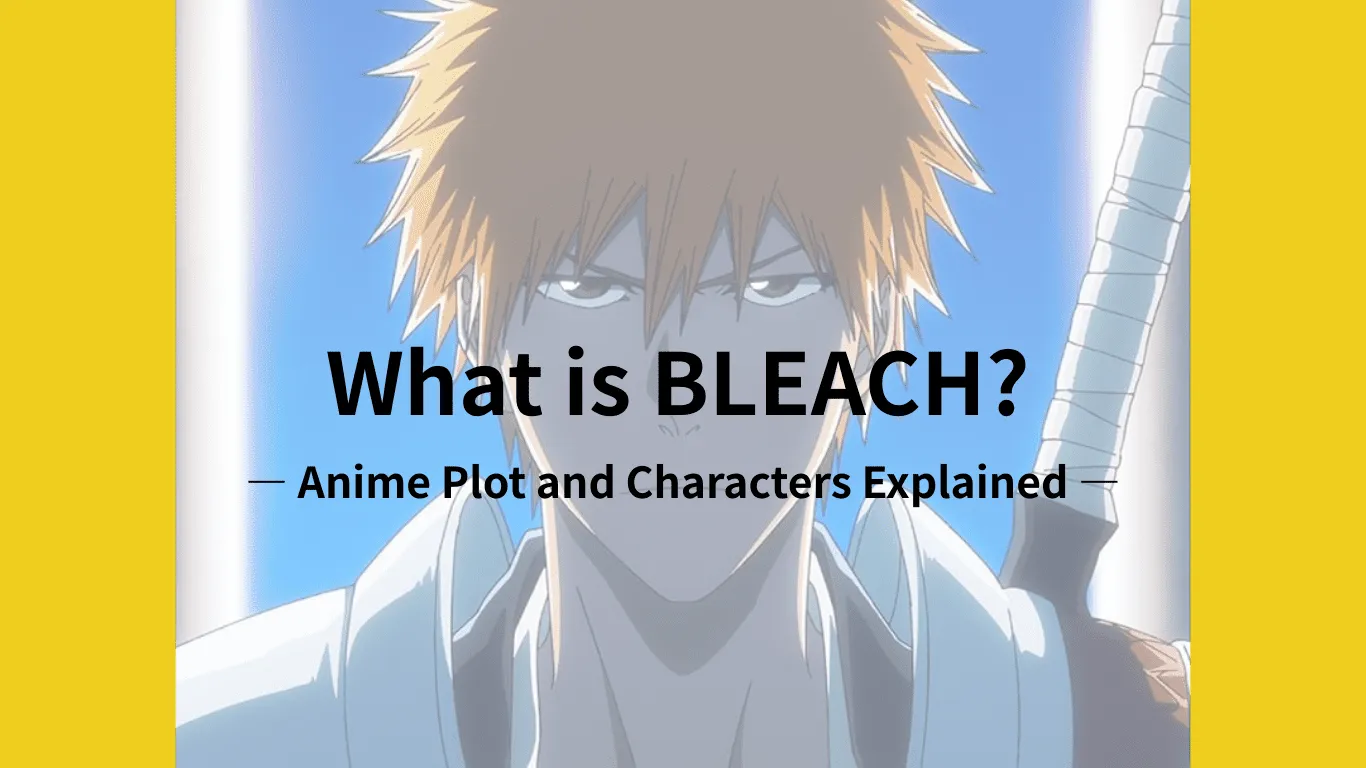
For over two decades, the orange-haired substitute Soul Reaper, Ichigo Kurosaki, has been an icon. But with the recent anime adaptation of the final arc, the Thousand-Year Blood War (TYBW), BLEACH has experienced a renaissance, captivating both nostalgic veterans and a new generation of viewers. Why does this series refuse to fade? The answer lies in its unique blend of urban fantasy, punk-rock aesthetics, and poetic tragedy.
“The Big 3” of Shonen Jump: Naruto, One Piece, and BLEACH
To understand the global impact of anime in the 2000s, one must understand “The Big 3.” Alongside Masashi Kishimoto’s Naruto and Eiichiro Oda’s One Piece, BLEACH formed a triumvirate that dominated sales charts and international discourse. While One Piece offered grand adventure and Naruto focused on bonds and perseverance, BLEACH was the definition of “Cool.”
It was sharper, darker, and more fashion-forward than its peers. It bridged the gap between traditional shonen battles and a more mature, sleek presentation that appealed to teenagers who wanted something edgier. The “Big 3” era was critical in establishing anime as a mainstream medium in the West, and BLEACH’s contribution—bringing supernatural samurai into a modern setting—was instrumental.
Source: Viz Media Official BLEACH Page
The Legacy of Tite Kubo: Style Over Everything
Tite Kubo is not just a mangaka; he is a designer. His approach to storytelling is visually driven, often prioritizing “mood” and “impact” over traditional exposition. Critics sometimes point to his minimalist backgrounds, but fans know this is a deliberate choice. By stripping away the environment, Kubo forces the reader’s eye solely onto the characters and their emotions.
Kubo’s influence extends beyond manga panels. His characters wear street clothes that look like they belong on a runway in Harajuku. The chapter title pages often feature English poetry that sets a melancholic tone. This distinct sense of style—often referred to as “Kubo-ism”—is why BLEACH remains timeless. It doesn’t look like a relic of the 2000s; it looks like a high-concept art book come to life.
Story Arc Overview: From Substitute Shinigami to the Blood War
BLEACH is a saga divided into several major arcs. For new viewers, the sheer volume of episodes can be daunting. Here is the definitive roadmap to the canon storyline.
The Agent of the Shinigami & Soul Society Arc: Where It All Began
The story begins with Ichigo Kurosaki, a 15-year-old high school student who can see ghosts. His life changes forever when he meets Rukia Kuchiki, a Soul Reaper (Shinigami). After Rukia is injured protecting Ichigo’s family from a malevolent spirit known as a “Hollow,” she transfers her powers to him.
This arc transitions from an episodic “monster of the week” format into one of the greatest rescue arcs in anime history: The Soul Society Arc. Ichigo and his friends must invade the afterlife to save Rukia from execution. This arc introduced the Gotei 13 (the 13 Court Guard Squads), establishing the hierarchy of Captains that remains central to the series. The battles here—Ichigo vs. Kenpachi, Ichigo vs. Byakuya—are legendary, defining the series’ high-octane swordplay.
The Arrancar & Hueco Mundo Arc: The Treason of Aizen
Following the shocking betrayal revealed at the end of the Soul Society arc, the story shifts to a war against the Arrancars—Hollows that have gained Shinigami powers by removing their masks. Leading them is the traitor Captain, Sosuke Aizen.
This saga is massive, spanning the invasion of the classic Hueco Mundo (the Hollow world) and the “Battle of Karakura Town.” It introduces the Espada, the ten strongest Arrancars, each representing an aspect of death (e.g., Loneliness, Despair, Destruction). The confrontation between Ichigo and Ulquiorra Cifer remains a pinnacle of animation and emotional storytelling.
The Lost Agent Arc: Ichigo’s Struggle
Often overlooked, the Lost Agent Arc (or Fullbring Arc) is a psychological thriller compared to the war epics before it. After losing his powers in the fight against Aizen, Ichigo struggles with living a normal life. He is approached by a group called Xcution, humans who can manipulate the souls of objects (Fullbringers).
While action-light, this arc is crucial for understanding Ichigo’s character. It explores his identity crisis: who is Ichigo Kurosaki without his sword? It sets the stage for his eventual return to the battlefield.
The Thousand-Year Blood War (TYBW): The Final Battle
This is the current centerpiece of the franchise. The Quincy, a race of human spiritual mediums thought to have been exterminated by the Shinigami 1,000 years ago, return to wage total war. Led by their king, Yhwach, the Wandenreich empire invades the Soul Society, decimating the Gotei 13.
The anime adaptation of this arc (starting in 2022) is a visual spectacle, utilizing modern lighting, shading, and composition techniques that far surpass the original TV series. It is darker, bloodier, and resolves the deepest mysteries of Ichigo’s lineage. It is the conclusion fans waited a decade to see animated.
Source: TV Animation BLEACH: Thousand-Year Blood War Official Site
Key Characters: The Souls That Drive the Story
BLEACH has a massive cast, but a few key players define the narrative’s heart.
Ichigo Kurosaki: The Protector Who Defies Fate
Unlike Naruto (who wants to be Hokage) or Luffy (who wants to be Pirate King), Ichigo has no grand ambition. His goal is simple: “I want to protect.” This lack of a “grand dream” makes him uniquely relatable. He fights not for glory, but because the people he cares about are in danger. He is a reactive protagonist who is forced into proactive situations, making his growth feel organic and grounded in empathy.
The Gotei 13: Captains and Their Philosophies
The Captains of the Gotei 13 are arguably as popular as the main cast. Each represents a different philosophy of justice and power:
- Byakuya Kuchiki (Squad 6): Represents “Order and Law.” His journey is learning to balance duty with love.
- Kenpachi Zaraki (Squad 11): Represents “Pure Combat.” He fights for the thrill, embodying the raw violence of the sword.
- Toshiro Hitsugaya (Squad 10): A prodigy carrying the burden of genius and youth.
- Genryusai Shigekuni Yamamoto (Captain-Commander): The personification of “History and Wrath.”
The Villains: Sosuke Aizen vs. Yhwach
Sosuke Aizen is frequently cited as one of the greatest anime villains of all time. His calmness, intellect, and the famous line *”Since when were you under the impression…”* showcase a villain who dominates through manipulation rather than just brute force.
In contrast, Yhwach, the antagonist of the final arc, is an overwhelming force of nature. If Aizen is a “God of Deception,” Yhwach is the “God of Conquest.” The contrast between these two main antagonists highlights the shift in tone from the middle to the end of the series.
The Unique Charm of BLEACH: Aesthetics and Mechanics
The Art of “Bankai”: Power Systems Explained
The phrase “Bankai” (Final Release) is iconic. It is the ultimate technique of a Shinigami, releasing the full power of their Zanpakuto (sword). What makes this system brilliant is that a Bankai reflects the user’s soul. It isn’t just a power-up; it is a character study.
For example, Soi Fon, an assassin who prefers stealth, hates her Bankai because it is a massive, flashy missile—a contradiction that adds depth to her character. This integration of power and personality is what makes BLEACH battles so compelling.
Visual Poetry: Tite Kubo’s Character Designs and Poems
Every volume of the BLEACH manga begins with a poem written by Kubo. These poems are not mere flavor text; they provide insight into the featured character’s psyche. For instance, the poem for Ulquiorra reads:
“Heart, is it there? If I tear open that chest of yours, will I see it there? If I smash open that skull of yours, will I see it there?”
This literary approach elevates the material, giving it a melancholic beauty rare in shonen manga.
The Sound of Souls: Shiro Sagisu’s Musical Score
No discussion of the anime is complete without mentioning Shiro Sagisu. His soundtrack is an eclectic mix of Spanish flamenco, techno, choir, and rock. Tracks like “Number One” (Ichigo’s theme) and “Treachery” are instantly recognizable. The music builds an atmosphere that is distinctly “BLEACH”—cool, tragic, and epic.
World-Building 101: Understanding the Three Realms
The universe of BLEACH is balanced on the cycle of souls between three main worlds:
- The World of the Living: Modern-day Japan, where humans reside.
- Soul Society: The afterlife where Shinigami and souls dwell. It resembles feudal Japan mixed with bureaucratic elements.
- Hueco Mundo: The desert world of Hollows (lost souls). It is a realm of eternal night and white sand.
There is also Hell, a fourth realm for souls who committed heinous crimes during their human lives, though it is explored less frequently in the main canon.
Quincy, Hollows, and Shinigami: The Racial Balance
The conflict in BLEACH is essentially a race war. Shinigami purify Hollows to send them to Soul Society, maintaining the balance of souls. Quincies, however, completely destroy Hollow souls. This destruction threatens to tip the scales and collapse the worlds, which is the root cause of the conflict between the Shinigami and the Quincies.
For Beginners: How to Watch BLEACH Without Getting Lost
Anime vs. Manga: Which Should You Choose?
Both are excellent, but the manga offers Tite Kubo’s unadulterated art style, which is cleaner and high-contrast. The anime, however, features the incredible soundtrack and voice acting (Masakazu Morita as Ichigo is iconic).
Recommendation: Read the manga for the original run (up to chapter 479), then watch the Thousand-Year Blood War anime, as Kubo is heavily involved in its production and has added new canon scenes that were not in the manga.
The Ultimate Filler Guide: Episodes to Skip
The original BLEACH anime (2004-2012) is notorious for its “filler arcs”—stories not present in the manga, created to let the manga catch up. To save time, you should SKIP the following:
- The Bount Arc (Episodes 64–109): Often considered the weakest arc. Safe to skip.
- The New Captain Shusuke Amagai Arc (Episodes 168–189): Decent story, but non-canon.
- The Zanpakuto Rebellion Arc (Episodes 230–265): High quality and interesting character designs (Kubo designed them), but still filler. watch if you want more content.
- The Invading Army Arc (Episodes 317–342): Great animation, but filler.
FAQ: Common Questions About BLEACH
Is the BLEACH anime finished?
The original anime run ended in 2012. However, the series returned in October 2022 with BLEACH: Thousand-Year Blood War, which adapts the final arc of the manga. This new series is ongoing and will conclude the story.
What does “BLEACH” actually mean in the context of the series?
According to Tite Kubo, the title “BLEACH” was chosen because it evokes the color white (referencing the white of the Soul Reapers’ foes or the idea of cleansing souls), but he didn’t want to use “White” as the title because it sounded too plain. “BLEACH” implies the removal of color/stains, symbolizing the purification of souls.
Conclusion: The Enduring Legacy of the Soul Reapers
BLEACH is more than just a battle shonen; it is a mood piece about protecting what matters, accepting grief, and overcoming fate with style. From the nostalgic streets of Karakura Town to the royal palaces of the Soul King, Ichigo’s journey is one of the most visually stunning rides in anime history.
With the Thousand-Year Blood War delivering cinema-quality episodes, there has never been a better time to pick up your Zanpakuto and join the fray. Whether you are here for the philosophy, the fashion, or just to hear “Bankai” screamed at the top of a lung, BLEACH welcomes you.
Bankai.