- Entering the World of Re:Zero
- What is the Re:Zero Anime? Understanding the Premise
- Key Characters: A Deep Dive into the Cast
- Complete Watch Guide: Order and Arcs
- Analysis: Themes and Visuals
- Analysis: Themes and Visuals
- Source Material: Light Novels and Manga
- FAQ:About Re:Zero Anime
- Why Re:Zero is a Modern Classic
Entering the World of Re:Zero
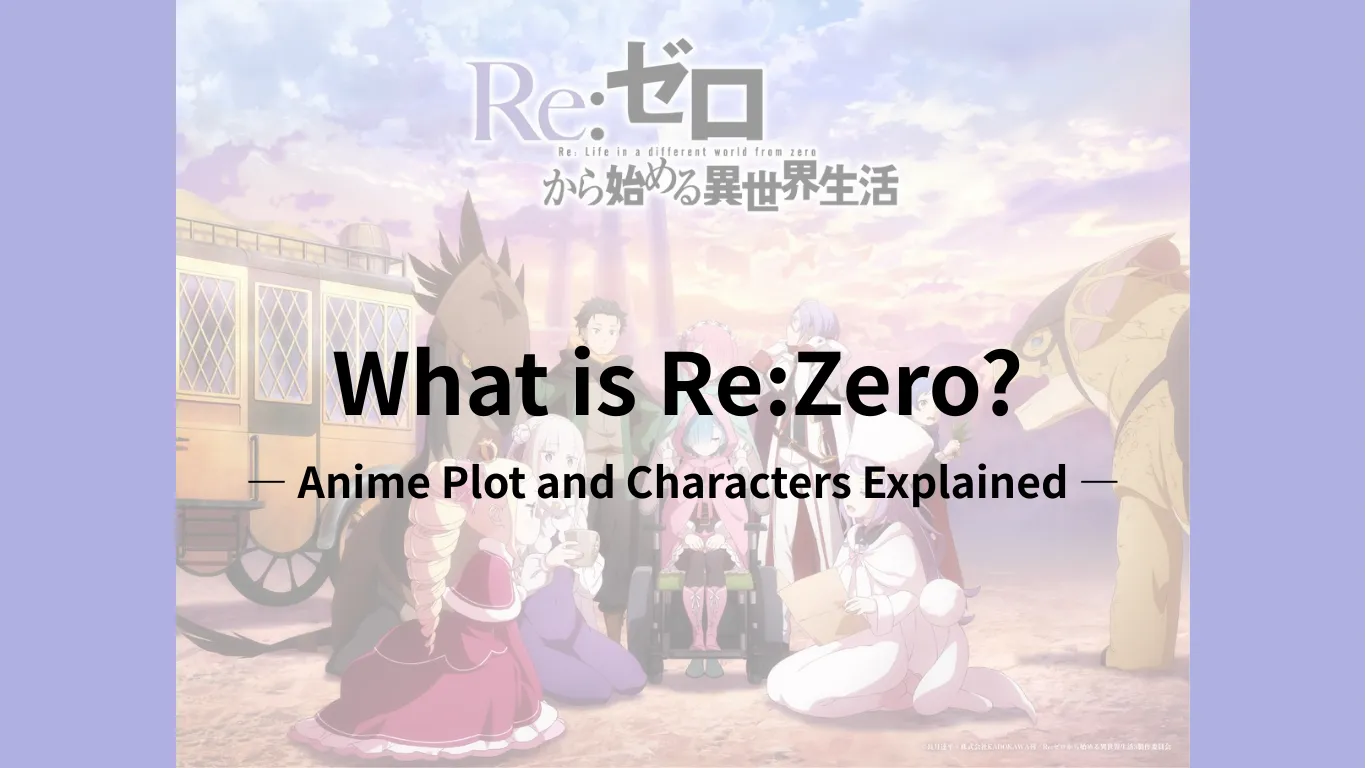
In the vast and ever-expanding landscape of the isekai (another world) genre, few titles have managed to leave as lasting an impact as Re:Zero − Starting Life in Another World (often shortened to Re:Zero). Since its anime adaptation first aired in 2016, it has captivated millions of fans worldwide, distinguishing itself from the sea of generic power fantasies with its raw psychological depth, intricate lore, and relentless narrative tension.
For the uninitiated, the premise might seem deceptively simple: a socially awkward teenage boy is suddenly transported to a magical fantasy world. However, viewers quickly discover that Re:Zero is not a story about escapism or easy victories. It is a grueling, emotional, and often terrifying journey of self-discovery. The series deconstructs the typical tropes of the genre, presenting a world where consequences are severe, and the protagonist is painfully human.
Whether you are looking for a dark fantasy mystery, a complex character study, or a heart-wrenching romance, the Re:Zero anime offers a rich narrative tapestry that rewards deep engagement. This guide serves as your comprehensive entry point into the franchise, breaking down the mechanics, characters, and story arcs that define this modern masterpiece. By the end of this article, you will understand why Re:Zero stands at the pinnacle of modern anime storytelling.
What is the Re:Zero Anime? Understanding the Premise
The Hook: A Sudden Summoning to Another World
The story begins in the most mundane setting imaginable: a convenience store in modern-day Japan. Natsuki Subaru, a hikikomori (shut-in) with no apparent job or academic prospects, steps out into the night to buy snacks. In the blink of an eye, the world around him shifts. There is no truck accident, no divine meeting with a god, and no grand prophecy—just a sudden, unexplained transition from a quiet street to a bustling medieval fantasy marketplace.
Initially, Subaru reacts with the enthusiasm typical of an anime-savvy teenager. He assumes he has been summoned to be a hero, gifted with incredible magical powers and destined to save a beautiful princess. He tests for super strength and magic, only to find he is just as ordinary in this new world as he was in Japan. The harsh reality sets in quickly: he has no money, no status, and no ability to read the local language.
This immediate subversion of expectations sets the tone for the entire series. The world of Re:Zero is not designed to cater to Subaru; it is a living, breathing ecosystem with its own politics and dangers, indifferent to his existence. His initial arrogance and reliance on genre tropes lead him into immediate trouble, culminating in a brutal encounter in a loot house that changes his destiny forever.
Source: Episode 1 Summary, Re:Zero Official Anime Site (EN)
The Core Mechanic: “Return by Death” Explained
The defining element of Re:Zero is Subaru’s unique ability, which he dubs “Return by Death.” Contrary to his initial hopes for offensive magic or swordsmanship, his power is a curse disguised as a gift. Whenever Subaru dies, his consciousness is rewound to a specific point in time in the past—a “save point”—allowing him to retry the events that led to his demise.
However, this ability comes with excruciating caveats:
- He retains the memories of his death: Every sensation of pain, fear, and despair is etched into his mind. He remembers being disemboweled, frozen, or decapitated vividly.
- The “Save Points” are unpredictable: He does not control when or where the checkpoint is set. It usually updates after he overcomes a significant hurdle, meaning he can never go back to fix mistakes once a checkpoint has moved.
- The Taboo: He is physically incapable of telling anyone about this ability. If he attempts to speak of it, a shadowy hand grasps his heart, inducing paralyzing pain or threatening the lives of those listening to him.
This mechanic transforms the anime from a standard adventure into a psychological thriller. “Return by Death” is not just a plot device to keep the protagonist alive; it is the source of his trauma. Subaru must watch his friends die repeatedly, knowing that he is the only one who remembers the failed timelines. He carries the lonely burden of saving everyone, often leading to mental breakdowns as he struggles to find the “perfect run” where no one has to die.
Source: “Return by Death” Wiki, Re:Zero Wiki
Dark Fantasy vs. Traditional Isekai: What Makes It Unique?
To understand Re:Zero, one must understand what it is reacting against. In traditional isekai anime (like Sword Art Online or That Time I Got Reincarnated as a Slime), the protagonist usually gains power quickly, builds a harem of admirers, and solves problems with superior strength or intellect.
Re:Zero flips this script entirely.
- Powerlessness: Subaru is often the weakest person in the room. He cannot defeat the villains through force; he must use information, negotiation, and strategy gained through repeated failures.
- Horror Elements: The anime does not shy away from gore or psychological horror. The depiction of death is visceral and disturbing, emphasizing the weight of Subaru’s failures.
- Character Flaws: Subaru is not a perfect hero. Especially in the first season, he is petty, entitled, arrogant, and socially inept. The show forces the audience to confront his unlikable traits before allowing him to grow.
This approach makes Re:Zero a deconstruction of the genre. It asks the question: “What would actually happen to a normal, flawed teenager if they were dropped into a hostile fantasy world?” The answer is a gripping narrative of suffering and redemption that resonates deeply with viewers who appreciate character-driven storytelling.
Source: Genre Analysis, Anime News Network
Key Characters: A Deep Dive into the Cast
The strength of the Re:Zero anime lies in its ensemble cast. While the story is filtered through Subaru’s perspective, the characters around him are multi-dimensional, each with their own secret agendas, backstories, and emotional arcs.
Natsuki Subaru: The Complex Protagonist
Natsuki Subaru is perhaps one of the most controversial and well-written protagonists in modern anime. Unlike the stoic cool heroes often seen in the medium, Subaru wears his emotions on his sleeve. He is loud, abrasive, and often cringe-inducing in his desperate attempts to be liked.
The Arc of Humility: In the early episodes (Arc 1 and Arc 2), Subaru treats the world like a game where he is the main character. He assumes that because he helped Emilia (the heroine), she “owes” him affection. This toxic entitlement reaches a breaking point in the infamous Episode 13 of Season 1, where his behavior humiliates Emilia and leads to a severe rift in their relationship.
The beauty of Subaru’s character lies in his subsequent development. Through repeated deaths and the realization of his own incompetence, he is forced to strip away his pride. He learns that “Return by Death” is not a tool to make him a god, but a chance to serve others. By Season 2, Subaru transforms into a strategic, empathetic leader who values his own life not for selfish reasons, but because he realizes his friends grieve for him when he dies.
Key Traits:
- Affinity for Spirits: Although he lacks mana capacity, he has a high affinity for spirits.
- Miasma of the Witch: Subaru carries a scent known as the “Witch’s Scent,” which attracts monsters and makes characters suspicious of him.
- Unbreakable Will: Despite countless gruesome deaths, his determination to save his loved ones—specifically Emilia and Rem—never truly falters, earning him the respect of the audience.
Source: Natsuki Subaru Character Profile, MyAnimeList
Emilia: The Silver-Haired Half-Elf
If Subaru is the viewpoint character, Emilia is the narrative’s heart. She is a candidate for the 42nd King of the Dragon Kingdom of Lugnica. However, her path to the throne is fraught with immense difficulty due to her appearance: she is a silver-haired half-elf with amethyst eyes.
The Stigma of the Witch: In the world of Re:Zero, this specific physical description is identical to that of the “Witch of Envy,” Satella—a figure of terror who nearly destroyed the world 400 years ago. As a result, Emilia faces constant racism, fear, and ostracization from the general public. Despite this unfair treatment, she remains kind-hearted, selfless, and determined to create a nation where everyone is equal.
Relationship with Subaru: Subaru falls for Emilia instantly in the first episode, motivated by her kindness when she stops chasing a thief to help a lost child. Throughout the series, Emilia serves as Subaru’s primary motivation. However, the anime deconstructs this trope by showing that Emilia is not a prize to be won. She has her own agency, insecurities, and trauma (explored deeply in Season 2). Her growth involves stepping out of the shadows of Puck (her spirit familiar) and learning to trust in her own strength.
Source: Emilia Character Analysis, Re:Zero Wiki
Rem: The Fan-Favorite Maid and Her Impact
It is impossible to discuss Re:Zero without mentioning Rem. The blue-haired oni (demon) maid works at the Roswaal Mansion alongside her twin sister, Ram. While she initially appears to be a polite and stoic servant, her character arc is one of the most dramatic in the series.
From Killer to Savior: In the “Mansion Arc,” Rem is initially suspicious of Subaru due to the Witch’s scent lingering on him, leading to several brutal timelines where she is his executioner. This creates a terrifying dynamic that Subaru must navigate. However, once Subaru saves her life and helps her overcome her inferiority complex toward her sister, her feelings transform into unconditional devotion.
The “From Zero” Speech: Episode 18 of Season 1 is widely considered a turning point for the anime, largely due to Rem. When Subaru hits his absolute lowest point—filled with self-loathing and ready to give up—Rem delivers a heartfelt speech that rebuilds his ego from the ground up (“From Zero”). This moment cemented Rem as the “Best Girl” for a vast portion of the fanbase, creating a massive “Rem vs. Emilia” debate that continues to drive engagement in the community.
Source: Rem Character Profile, MyAnimeList
Ram, Beatrice, and Roswaal: The Roswaal Mansion Residents
The supporting cast in the Roswaal Mansion adds layers of mystery and comedy to the series.
- Ram: Rem’s older twin sister. She has pink hair and a sharp tongue. Unlike Rem, Ram is often sarcastic and critical of Subaru (“Barusu”), but she holds deep wisdom. She lost her demon horn in the past, leaving her physically weaker but magically adept.
- Beatrice: A drill-haired artificial spirit who guards the mansion’s library (the Forbidden Library). She is generally grumpy and condescending to Subaru, yet she becomes a crucial ally. Her mysterious contract and her true age are central plot points in Season 2.
- Roswaal L. Mathers: The lord of the mansion and Emilia’s sponsor for the Royal Selection. A powerful mage who dresses like a clown, his eccentric behavior hides a sharp, manipulative intellect. Viewers constantly question his true motives—is he a friend or a foe?
Source: Character Cast List, Behind The Voice Actors
The Witches of Sin and The Witch Cult
The antagonists of Re:Zero are not generic evil lords; they are tied to the lore of the “Witches of Sin.”
- The Witch Cult: A fanatic religious organization worshiping the Witch of Envy. They are led by “Sin Archbishops,” each representing a deadly sin.
- Petelgeuse Romanee-Conti (Sloth): The primary antagonist of the second half of Season 1. His unhinged, contorted mannerisms and terrifying diligence make him a memorable villain.
- The Witches of Sin: While Satella (Envy) is the most feared, Season 2 introduces the other Witches (Greed, Wrath, Sloth, Lust, Gluttony, and Pride) in the mental realm. Echidna, the Witch of Greed, plays a pivotal role in testing Subaru’s resolve and expanding the lore of the world.
Complete Watch Guide: Order and Arcs
For a newcomer, the release order and different versions (Director’s Cut vs. Original) can be confusing. Here is the definitive guide to watching Re:Zero.
1. Season 1 Overview: From the Capital to the White Whale
- Episodes: 25
- Original Air Date: 2016
- Key Arcs: The Capital City Arc, The Mansion Arc, The Royal Selection Arc, The White Whale/Petelgeuse Arc.
- Summary: This season introduces Subaru to the world, establishes the “Return by Death” mechanic, and covers his initial psychological breakdown and subsequent rise as a hero. It concludes with the epic battle against the White Whale and the Witch Cult.
2. The OVAs: Memory Snow and The Frozen Bond
After Season 1, you should watch the two OVAs (Original Video Animations) before starting Season 2.
- Re:Zero − Starting Life in Another World: Memory Snow (2018):
- Type: Slice of Life / Comedy.
- Placement: Takes place chronologically in the middle of Season 1 (between the Mansion Arc and Royal Selection).
- Why Watch: It provides a rare moment of peace and character bonding, showing Subaru’s date with Emilia and a drunk Rem. It adds emotional weight to the suffering that follows.
- Re:Zero − Starting Life in Another World: The Frozen Bond (2019):
- Type: Prequel Movie.
- Placement: Prequel to the entire series (focusing on Emilia).
- Why Watch: It details how Emilia met Puck and the harsh persecution she faced living in the Ellior Forest. It is essential for understanding Emilia’s character depth in Season 2.
3. Season 2 Overview: The Trials of the Sanctuary
- Episodes: 25 (Split Cour: Part 1 and Part 2)
- Original Air Date: 2020-2021
- Key Arcs: The Sanctuary Arc.
- Summary: Picking up immediately after Season 1, this season is denser and more dialogue-heavy. It focuses on the “Sanctuary,” the home of the Witch of Greed. Subaru must undergo “Trials” to free the Sanctuary, while simultaneously dealing with an attack on the Roswaal Mansion. This season delves deep into the backstories of Subaru, Emilia, Otto, and Beatrice.
4. Director’s Cut vs. Original Broadcast: Which to Watch?
This is the most common FAQ. In 2020, a “Director’s Cut” of Season 1 was released. It re-edited the 25 episodes into thirteen 1-hour episodes.
- Recommendation: Watch the Director’s Cut of Season 1.
- Reason: While the animation remains largely the same, the Director’s Cut improves pacing and audio. Crucially, the final episode of the Director’s Cut includes a new post-credits scene that was not in the original 2016 broadcast. This scene is the direct cliffhanger setup for Season 2.
- Note: If you watch the original 2016 version, you MUST watch the first few minutes of Season 2 immediately to see that missing scene.
5. Outlook for Season 3 and Beyond
As of the time of writing, Re:Zero Season 3 has been announced and is highly anticipated.
- Content: It is expected to cover Arc 5 (The Stars that Engrave History) and potentially Arc 6 (The Corridor of Memories).
- Tone Shift: Arc 5 is known for being more action-oriented (“The Battle City Arc”) compared to the psychological focus of Arc 4 (Season 2). This ensures that the anime remains fresh and exciting for long-time viewers.
Source: Franchise Release Data, Anime News Network
Analysis: Themes and Visuals
What elevates Re:Zero from a standard fantasy adventure to a cult classic is its execution. The series combines deep psychological themes with high-production visuals and sound design to create an immersive, often unsettling experience.
Psychological Horror and Trauma
While Re:Zero is marketed as a fantasy, it shares more DNA with psychological horror. The narrative is a relentless examination of trauma.
The Weight of Memory: Unlike other time-travel stories where the protagonist fixes mistakes and moves on, Subaru carries the accumulated memories of every death. He remembers the sensation of his flesh tearing, the coldness of freezing to death, and the sight of his friends’ corpses. The anime depicts the onset of PTSD (Post-Traumatic Stress Disorder) realistically. Subaru suffers from nightmares, panic attacks, and erratic behavior that other characters cannot understand because they lack his context.
Deconstructing the “Hero”: The series challenges the idea that suffering automatically makes one a hero. Subaru’s suffering often leads him to make worse decisions initially—lashing out, becoming possessive, or shutting down. The show argues that trauma is not noble; it is messy and destructive. Subaru’s true heroism comes not from the act of dying, but from the act of choosing to try again despite the terror. This resilience resonates with viewers facing their own mental health struggles, making Subaru a symbol of perseverance.
Source: The Psychology of Re:Zero, Psychology Today (General Concept Reference)
Animation Quality by Studio White Fox
Re:Zero is produced by White Fox, a studio known for Steins;Gate and Akame ga Kill!. Their adaptation of Re:Zero is widely praised for its dedication to the source material.
Cinematic Direction: One of the most unique aspects of the Re:Zero anime is its runtime management. The production team frequently omits the Opening (OP) and Ending (ED) themes to squeeze in more story content. In Season 2, there were episodes with nearly 29 minutes of pure animation, a rarity in the industry where the standard is 20-22 minutes. This dedication shows the studio’s respect for the density of the novel’s plot.
Visualizing Despair: The character designs by Kyuta Sakai are deceptive. They appear soft, cute, and colorful, typical of “moe” anime. This creates a jarring dissonance when the violence starts. The animators do not shy away from grotesque imagery—contorted expressions of agony, realistic blood spatter, and the decaying effects of magic. This contrast between the cute art style and the brutal violence (often called “gap moe” in a dark sense) amplifies the horror elements.
Source: Studio White Fox Works, Anime News Network
The Iconic Soundtrack and Voice Acting
The audio landscape of Re:Zero is just as important as the visuals.
Music by Kenichiro Suehiro: The composer, Kenichiro Suehiro, uses a blend of orchestral fantasy music and electronic horror tones.
- “Call of the Witch”: The eerie, chorus-like sound effect that plays whenever Subaru mentions “Return by Death” or the Witch is near. It instantly triggers a Pavlovian response of dread in the audience.
- “Requiem of Silence”: Used in Episode 15, the credits roll over a tragic scene with a somber, haunting melody instead of the usual upbeat pop song, creating one of the most memorable endings in anime history.
Theme Songs: The opening and ending tracks, particularly by the group MYTH & ROID, are iconic. Songs like “STYX HELIX” and “Paradisus-Paradoxum” perfectly capture the show’s blend of melancholy and mystery.
Voice Acting (Seiyuu):
- Yusuke Kobayashi (Subaru): His performance is legendary. He delivers gutteral screams of pain, manic laughter, and soft, sobbing whispers with terrifying realism. He won the Best Actor award at the 11th Seiyu Awards, largely due to this role.
- Rie Takahashi (Emilia): Brings a gentle yet firm strength to the character, balancing innocence with resolve.
- Inori Minase (Rem): Her range from the cold, monotone maid to the emotional, weeping confessor in Episode 18 is a masterclass in voice acting.
Source: 11th Seiyu Awards Winners, Seiyu Awards Official
Analysis: Themes and Visuals
What elevates Re:Zero from a standard fantasy adventure to a cult classic is its execution. The series combines deep psychological themes with high-production visuals and sound design to create an immersive, often unsettling experience.
Psychological Horror and Trauma
While Re:Zero is marketed as a fantasy, it shares more DNA with psychological horror. The narrative is a relentless examination of trauma.
The Weight of Memory: Unlike other time-travel stories where the protagonist fixes mistakes and moves on, Subaru carries the accumulated memories of every death. He remembers the sensation of his flesh tearing, the coldness of freezing to death, and the sight of his friends’ corpses. The anime depicts the onset of PTSD (Post-Traumatic Stress Disorder) realistically. Subaru suffers from nightmares, panic attacks, and erratic behavior that other characters cannot understand because they lack his context.
Deconstructing the “Hero”: The series challenges the idea that suffering automatically makes one a hero. Subaru’s suffering often leads him to make worse decisions initially—lashing out, becoming possessive, or shutting down. The show argues that trauma is not noble; it is messy and destructive. Subaru’s true heroism comes not from the act of dying, but from the act of choosing to try again despite the terror. This resilience resonates with viewers facing their own mental health struggles, making Subaru a symbol of perseverance.
Source: The Psychology of Re:Zero, Psychology Today (General Concept Reference)
Animation Quality by Studio White Fox
Re:Zero is produced by White Fox, a studio known for Steins;Gate and Akame ga Kill!. Their adaptation of Re:Zero is widely praised for its dedication to the source material.
Cinematic Direction: One of the most unique aspects of the Re:Zero anime is its runtime management. The production team frequently omits the Opening (OP) and Ending (ED) themes to squeeze in more story content. In Season 2, there were episodes with nearly 29 minutes of pure animation, a rarity in the industry where the standard is 20-22 minutes. This dedication shows the studio’s respect for the density of the novel’s plot.
Visualizing Despair: The character designs by Kyuta Sakai are deceptive. They appear soft, cute, and colorful, typical of “moe” anime. This creates a jarring dissonance when the violence starts. The animators do not shy away from grotesque imagery—contorted expressions of agony, realistic blood spatter, and the decaying effects of magic. This contrast between the cute art style and the brutal violence (often called “gap moe” in a dark sense) amplifies the horror elements.
Source: Studio White Fox Works, Anime News Network
The Iconic Soundtrack and Voice Acting
The audio landscape of Re:Zero is just as important as the visuals.
Music by Kenichiro Suehiro: The composer, Kenichiro Suehiro, uses a blend of orchestral fantasy music and electronic horror tones.
- “Call of the Witch”: The eerie, chorus-like sound effect that plays whenever Subaru mentions “Return by Death” or the Witch is near. It instantly triggers a Pavlovian response of dread in the audience.
- “Requiem of Silence”: Used in Episode 15, the credits roll over a tragic scene with a somber, haunting melody instead of the usual upbeat pop song, creating one of the most memorable endings in anime history.
Theme Songs: The opening and ending tracks, particularly by the group MYTH & ROID, are iconic. Songs like “STYX HELIX” and “Paradisus-Paradoxum” perfectly capture the show’s blend of melancholy and mystery.
Voice Acting (Seiyuu):
- Yusuke Kobayashi (Subaru): His performance is legendary. He delivers gutteral screams of pain, manic laughter, and soft, sobbing whispers with terrifying realism. He won the Best Actor award at the 11th Seiyu Awards, largely due to this role.
- Rie Takahashi (Emilia): Brings a gentle yet firm strength to the character, balancing innocence with resolve.
- Inori Minase (Rem): Her range from the cold, monotone maid to the emotional, weeping confessor in Episode 18 is a masterclass in voice acting.
Source: 11th Seiyu Awards Winners, Seiyu Awards Official
Source Material: Light Novels and Manga
For fans who cannot wait for the next anime season, the source material offers a vast ocean of content. Re:Zero started as a Web Novel (WN) before being adapted into a Light Novel (LN), and then into Manga and Anime.
Differences Between the Anime and Light Novel
The anime is considered a very faithful adaptation, but some cuts were inevitable due to the medium.
- Cut Content from Season 1 (Arc 3): The anime omitted a significant conversation in the Royal Capital regarding Al (Priscilla’s knight), who hints that he, like Subaru, is also from Japan. This is a major lore drop that was skipped but may become relevant later.
- Subaru’s Internal Monologue: The novels contain pages of Subaru’s internal thoughts, explaining his strategies and feelings in detail. The anime conveys this through facial expressions and voice acting, but the books offer a deeper look into his tactical planning.
- The “Interludes”: Some short stories and interludes that flesh out side characters (like Rem and Ram’s backstory details or daily life in the mansion) are trimmed for pacing.
Web Novel vs. Light Novel: The Web Novel is the “rough draft” written by the author, Tappei Nagatsuki. The Light Novel is the polished, edited, and official version. The anime follows the Light Novel. There are some divergence points; for example, the Web Novel is often darker and more gruesome, while the Light Novel streamlines the pacing.
Where to Read After the Anime
If you have finished Season 2 of the anime and want to continue the story:
- The Anime Ends at: The end of Arc 4 (The Sanctuary Arc).
- Start Reading the Light Novel at:Volume 16.
- Volume 15 concludes Arc 4.
- Volume 16 begins Arc 5: The Stars that Engrave History.
Structure of the Story Arcs:
- Arc 1: The First Day (Vol 1)
- Arc 2: The Tumultuous Week (Vol 2-3)
- Arc 3: Truth of Zero (Vol 4-9) – Season 1 ends here.
- Arc 4: The Everlasting Contract (Vol 10-15) – Season 2 ends here.
- Arc 5: The Stars that Engrave History (Vol 16-20) – Likely Season 3.
- Arc 6: The Hall of Memories (Vol 21-25)
- Arc 7: The Land of Wolves (Vol 26-33)
- Arc 8: The Vincent Vollachia Saga (Vol 34-Current)
The author has stated that the story is roughly halfway done, meaning Re:Zero will be a long-running epic for years to come.
Source: Re:Zero Novel Product Info, Yen Press (English Publisher)
FAQ:About Re:Zero Anime
As one of the most popular isekai series, Re:Zero generates a lot of questions. Here are the answers to the most common inquiries from new viewers.
Is the Re:Zero anime finished?
No, the Re:Zero anime is not finished. As of now, two seasons (totaling 50 episodes) and two OVAs have been released. Season 3 has been officially announced and is in production. The source material (Light Novels) is still ongoing and is significantly ahead of the anime. The author, Tappei Nagatsuki, has stated that the series is roughly halfway through its planned story, so fans can expect content for many years to come.
Who does Subaru actually love?
This is the most debated topic in the community.
- Emilia: She is Subaru’s primary romantic interest. From the very first episode, his goal is to help her and make her smile. He formally confesses his love to her at the end of Season 1 and continues to pursue her in Season 2.
- Rem: Subaru loves Rem deeply as well, but the dynamic is different. After Rem’s confession in Season 1, Episode 18, Subaru rejects her romantic advance in favor of Emilia, but he acknowledges Rem as his most important emotional pillar. In the Light Novels, Subaru explicitly states he has room in his heart for both, though the anime focuses more heavily on his pursuit of Emilia.
Is Re:Zero too dark for casual viewers?
It depends on your tolerance for violence and psychological stress. Re:Zero is rated R-17+ for a reason. It features graphic scenes of dismemberment, torture, and suicide. More than the physical gore, the psychological toll—watching a character break down from repeated trauma—can be heavy. If you are looking for a lighthearted, “feel-good” adventure, this may not be the show for you. However, if you enjoy thrillers, mysteries, and overcoming adversity, the darkness serves a meaningful narrative purpose.
Where can I stream the Re:Zero anime?
For most English-speaking regions (North America, Europe, Oceania), Crunchyroll holds the streaming rights for both the subbed and dubbed versions.
- Crunchyroll: Seasons 1, 2, Director’s Cut, and OVAs.
- Netflix: Available in select Asian regions (like Japan, India, Philippines), but usually not in the West.
- Funimation: Previously held rights, but most content has migrated to Crunchyroll after the merger.
Why Re:Zero is a Modern Classic
Re:Zero − Starting Life in Another World is far more than just another “trapped in a fantasy world” story. It is a brutal yet beautiful exploration of the human condition. It strips away the power fantasies of the genre to ask a simple, poignant question: “How many times would you die to save the people you love?”
Through the eyes of Natsuki Subaru, we witness a character who is deeply flawed, often annoying, and painfully relatable. His journey from an arrogant boy to a self-sacrificing hero is one of the most satisfying character arcs in anime history. Supported by world-class animation from White Fox, a hauntingly beautiful soundtrack, and a lore-rich world that rivals high-fantasy epics, Re:Zero earns its place as a modern classic.
If you have not yet started this journey, prepare yourself. It will be painful, it will be emotional, but in the end, it will be incredibly rewarding. As Subaru Natsuki would say, even if you start from zero, you can always build something great.